
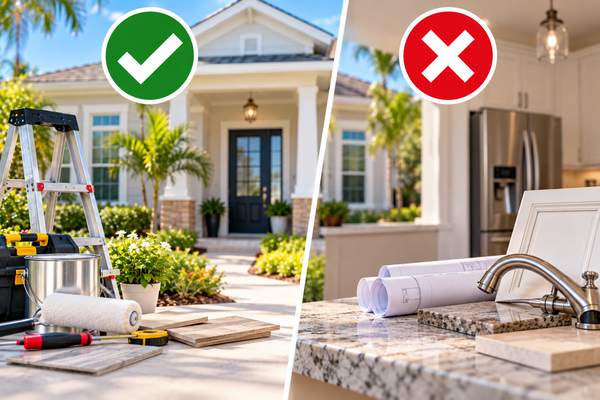
When preparing to sell your home, it’s tempting to fix everything that looks imperfect. But not every repair adds value and some can drain your budget without improving your sale price. Smart sellers focus on repairs that matter most to buyers and skip the ones that don’t move the needle.
The Psychology Behind Pre‑Sale Repairs
Buyers can begin forming opinions almost immediately after arriving at a property. They’re not expecting perfection — they’re looking for a home that feels well‑maintained and move‑in ready.
According to Realtor.com, minor cosmetic updates often have a bigger emotional impact than major renovations. The goal is to signal care and upkeep, not to remodel your way to a sale.
What Sellers Should Fix
1. Curb Appeal and First Impressions
Your home’s exterior is the first thing buyers see.
- Paint the front door and trim for a fresh, welcoming look.
- Replace dead plants and add mulch for instant polish.
- Fix cracked walkways or loose railings — small safety issues can raise red flags.
A clean, inviting exterior can increase perceived value.
2. Lighting and Fixtures
Outdated light fixtures make a home feel tired. Swap them for modern, energy‑efficient options.
LED lighting not only looks better but also appeals to eco‑conscious buyers.
Check out Energy.gov’s lighting guide for affordable upgrades that save money and boost appeal.
3. Plumbing and Leaks
A dripping faucet or running toilet signals neglect.
Fix leaks, replace worn washers, and ensure water pressure is consistent.
Buyers often interpret plumbing issues as signs of deeper problems — even if they’re minor.
4. Walls and Paint
Neutral colors sell homes.
Repaint scuffed walls in shades like soft gray, beige, or off‑white to make rooms feel larger and brighter.
Avoid trendy colors; they can alienate buyers.
For inspiration, browse Sherwin‑Williams’ top selling neutrals.
5. Flooring
If your carpet is stained or worn, replace it.
Hardwood floors should be cleaned and refinished if dull.
Buyers often overestimate the cost of flooring repairs, so tackling them upfront removes a mental barrier to offers.
6. Minor Kitchen and Bath Updates
You don’t need a full remodel.
Instead, focus on hardware, faucets, and caulk lines.
Replacing cabinet pulls and re‑grouting tile can make these spaces feel fresh without major expense.
See HGTV’s guide to budget kitchen updates for ideas that deliver high ROI.
What Sellers Should Leave Alone
1. Major Remodels
Large‑scale renovations rarely pay off before selling.
A $50,000 kitchen remodel might only return 60–70% of its cost, according to Remodeling Magazine’s Cost vs. Value Report.
Unless your home is severely outdated, skip the big projects and let buyers customize later.
2. Replacing Windows or Roofs (Unless Damaged)
These are expensive upgrades that buyers don’t expect unless there’s visible damage.
If your roof is functional and your windows aren’t drafty, disclose their age honestly and price accordingly.
You’ll save thousands without hurting your sale potential.
3. Perfecting Every Cosmetic Detail
Tiny imperfections — like a slightly uneven tile or a small scratch on hardwood — rarely affect offers.
Buyers expect “normal wear and tear.”
Focus instead on cleanliness and presentation, which matter far more than perfection.
4. Over‑Personalized Decor
Don’t spend money on trendy wallpaper or custom built‑ins.
Buyers want to imagine their own style, not yours.
Stick to neutral staging and remove personal photos or bold design choices.
5. High‑End Appliances
Unless your home is in a luxury market, replacing appliances with top‑tier brands won’t yield a return.
Clean and repair existing ones instead.
If you do upgrade, choose mid‑range stainless steel — it photographs beautifully and appeals to most buyers.
Bonus Tip: Prioritize ROI Over Emotion
It’s easy to get emotionally attached to your home’s details, but selling is a business decision.
Before spending on repairs, ask yourself:
“Will this make my home sell faster or for more money?”
If the answer is no, save your budget for staging, photography, and marketing — areas proven to drive results.