
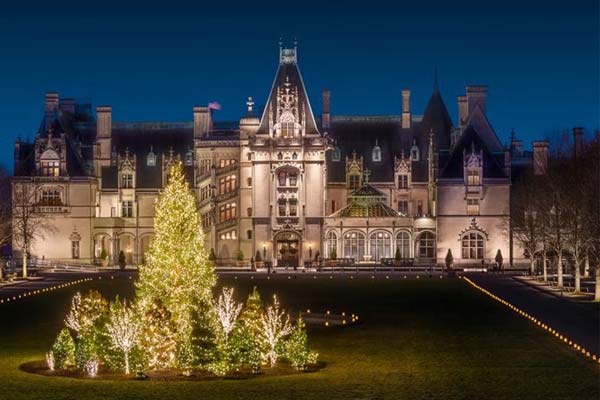
Have you ever dreamed of living in a beautiful, sprawling mansion with countless rooms, butler service, an indoor swimming pool, your own tennis courts, and a spectacular view? I mean castle-like! Dreamy, right? Most people will never be able to own a sprawling US mansion. However, we will show you where you can at least go and visit these properties across the world. Maybe you can get a taste of what it’s like to be in the economically elite!
Bon voyage!
🏰 Istana Nurul Iman Palace — The World’s Largest Residence

The largest mansion in the world is the Istana Nurul Iman Palace. Located in Brunei, this property is the residence of Sultan Hassanal Bolkiah. This luxurious residence boasts approximately 2.15 million square feet. Can you imagine?!
The home contains 1,788 rooms, 257 bathrooms, five swimming pools, and a banquet hall for 5,000 guests. Located in Bandar Seri Begawan, this magnificent palace is open to visitors during a three-day period once a year. During the Hari Raya celebrations at the end of Ramadan, tourists and locals are permitted to enter. Visitors receive free meals and have an opportunity to meet the Sultan. Over 100,000 visitors enter this “Open House” annually. Not surprisingly, locals and people from all over the world travel to see this beautiful architecture, designed by Leandro Locsin. Construction was completed in 1984. Gleaming with 22-carat gold domes, Italian marble, stabling 200 polo-ponies. Absolutely breathtaking!
Biltmore Estate – America’s Grand Chateau
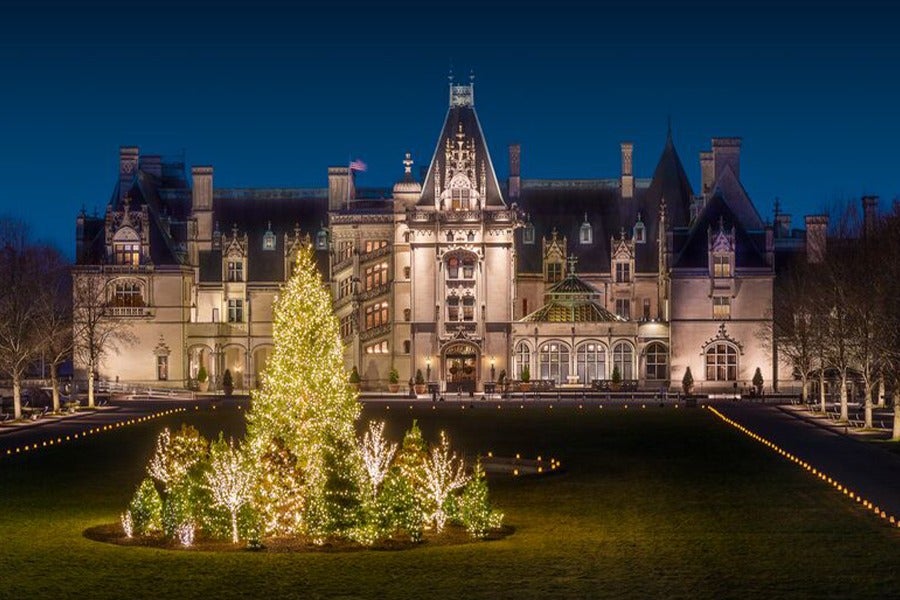
The Biltmore Estate is currently the largest privately owned home in the United States. Tucked away in the mountainous hills of Asheville, North Carolina, the estate sits on 8,000 meticulously maintained acres. This French Renaissance style mansion consists of 175,000 square feet. It was designed with 250 rooms, 35 bedrooms, 43 bathrooms, and 65 fireplaces! Architect Richard Morris Hunt designed the home, while Frederick Law Olmsted, one of the designers of New York City’s Central Park, created the estate’s landscape plan.
This luxury property features an impressive library with a collection of over 10,000 personal favorites! For recreation, the house offers an indoor 19th-century swimming pool, a bowling alley, a 70-foot-high Banquet Hall, and a Winter Garden. The estate holds original Vanderbilt family photographs, artwork, furnishings, and collections. The Vanderbilt family was known for their gracious hospitality. The mansion is accessible to the public for tours and also encompasses a winery, restaurants, and various hotels. Visitors are welcome to tour the Biltmore Estate by purchasing tickets on the Biltmore website.
The Breakers
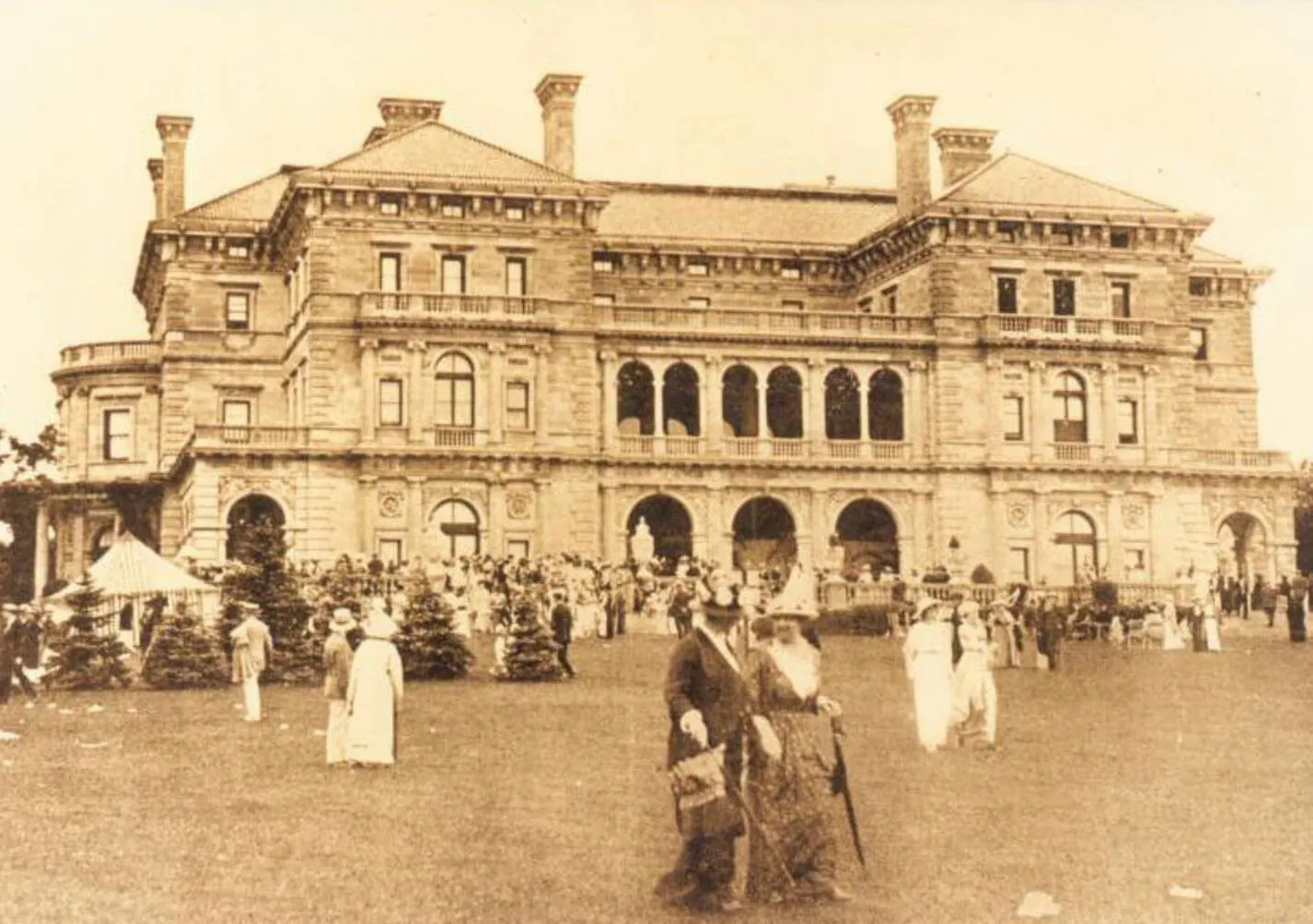
The Breakers stands as the most prestigious and grand of the Gilded Age “summer cottages” in Newport, Rhode Island. The mansion was completed in 1895 for Cornelius Vanderbilt II. Cornelius was the president of the New York Central Railroad. The 70-room palazzo remains a definitive symbol of the Vanderbilt family’s social and financial dominance in turn-of-the-century America. Preeminent architect Richard Morris Hunt designed the mansion in the Italian Renaissance style. It replaced a previous wood-framed house that had burned to the ground in 1892. To ensure the new structure was fireproof, Hunt used steel, brick, and stone, incorporating half a million cubic feet of marble.
The interiors were crafted by an international team of artisans. Highlights include the Great Hall, a massive room with 45-foot-high ceilings and limestone walls carved in the style of 16th-century Italian palaces; the Morning Room, decorated with platinum-leaf panels and delicate oil paintings on silver leaf; and the Dining Room, a 2,400-square-foot space flanked by 12 rose-colored alabaster columns and crowned by a massive bronze and crystal chandelier. The Preservation Society of Newport County manages the property, which is open to the public for self-guided and specialty daily tours.
Marble House
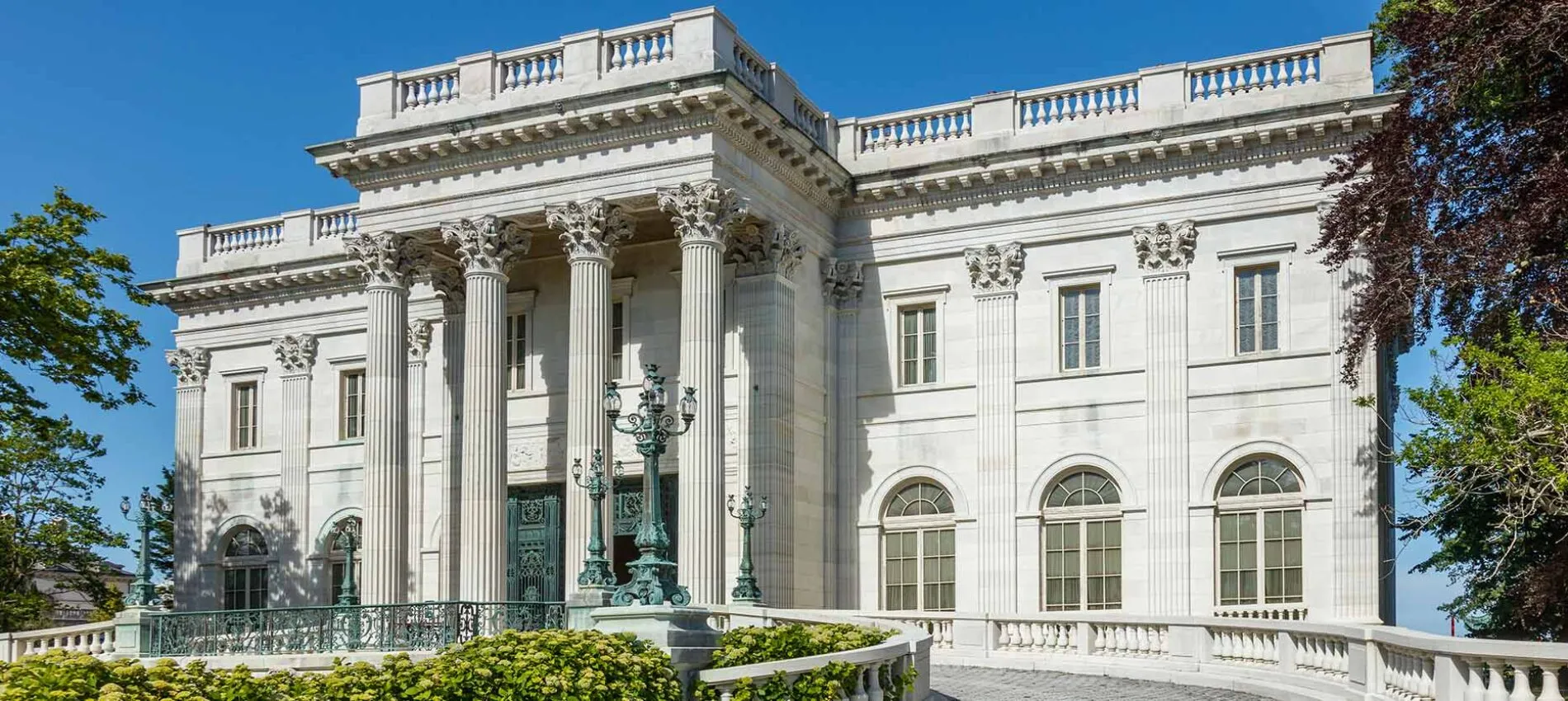
Marble House in Newport, Rhode Island, is a Gilded Age masterpiece built between 1888 and 1892 for Alva and William K. Vanderbilt, an $11‑million “summer cottage” whose opulence still stuns visitors today. Designed by famed architect Richard Morris Hunt in the Beaux‑Arts style, the mansion is clad in 500,000 cubic feet of marble, giving it the grandeur of a European palace. The Gold Room, Gothic Room, and Alva’s lavish bedroom showcase carved stone, gold leaf, and imported European artistry. After her divorce, Alva transformed Marble House into a hub for women’s suffrage activism. She added the iconic Chinese Tea House overlooking the Atlantic cliffs as a venue for rallies. Now a National Historic Landmark, Marble House remains one of Newport’s most dazzling estates. It’s a symbol of wealth, ambition, and the dramatic social shifts of America’s Gilded Age.
Andrew Carnegie Mansion
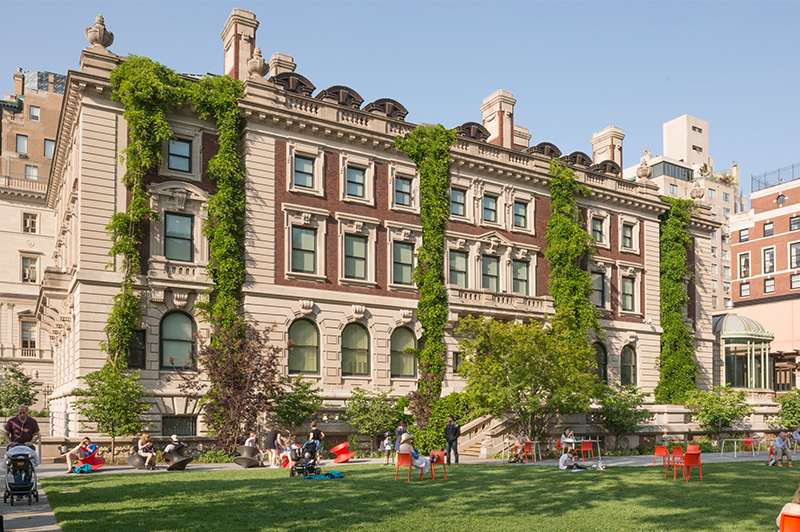
While visiting the Big Apple, be sure to check out The Andrew Carnegie Mansion. It is both a National Historic Landmark and a New York City designated landmark. Its construction influenced the development of the surrounding neighborhood, Carnegie Hill, and it remains a prominent example of Gilded Age architecture and innovation. The mansion also reflects Carnegie’s philanthropic legacy, as he directed much of his wealth from this residence to libraries, educational institutions, and cultural projects in the United States. The Andrew Carnegie Mansion is located at 2 East 91st Street in Manhattan, NY. This historic property consists of 64 rooms and is a Georgian Revival mansion now housing the Cooper Hewitt Smithsonian Design Museum.
The mansion was built between 1899 and 1902 for industrialist Andrew Carnegie, his wife Louise, and their daughter Margaret, on a 1.2-acre lot along Fifth Avenue on Manhattan’s Upper East Side, in the area now known as Carnegie Hill. Carnegie purchased the land in 1898, deliberately choosing a location north of other wealthy New Yorkers to allow for a spacious garden and to influence neighborhood development. The family lived in the mansion until Andrew’s death in 1919, and Louise remained there until 1946.
Designed by the architectural firm Babb, Cook & Willard, the mansion showcases Georgian Revival architecture with Beaux-Arts elements. The three-and-a-half-story brick-and-stone structure features a steel frame, multiple elevators, central heating, and early air-conditioning systems. These features were very technologically advanced for the time. The mansion contains at least 64 rooms across four above-ground stories. It boasts three basements, family bedrooms, guest rooms, staff quarters, a library, a picture gallery, and a conservatory.
Guy Lowell and Richard Schermerhorn Jr. designed its exquisite garden. It has beautiful pathways, flower beds, a rock garden, and mature trees. It is now open to the public as the Arthur Ross Terrace and Garden. Columbia University’s School of Social Work occupied the mansion from 1949 to 1971. The museum underwent major renovations from 2011 to 2014, expanding exhibition space and modernizing facilities while preserving historic features. The mansion now hosts design exhibitions, research facilities, and public programs, maintaining its historical and cultural significance. The Andrew Carnegie Mansion is one on the list you won’t want to miss!