
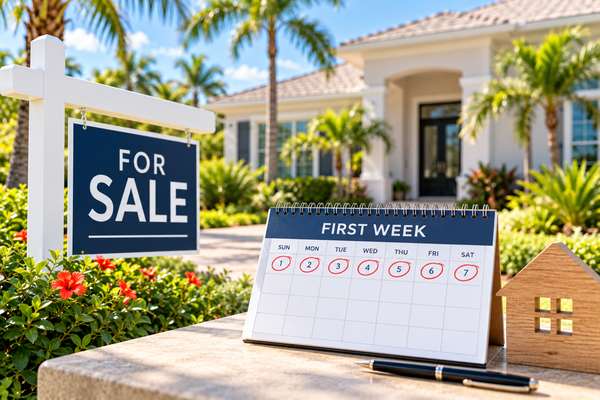
Your home’s first week on the market sets the tone for its entire sale. Learn why early momentum, pricing strategy, and presentation can make or break your final sale price.
When you list your home, the clock starts ticking — and the first week is everything.
That initial burst of attention from buyers, agents, and online searchers doesn’t just create excitement; it establishes your home’s market narrative. Whether your listing is seen as “hot and desirable” or “lingering and overpriced” depends almost entirely on how you handle those first seven days.
Let’s break down why that first week matters so much — and how to make it work in your favor.
The “Golden Window” of Buyer Attention
The moment your listing goes live, it enters what agents call the Golden Window — roughly the first 7–10 days when buyer interest peaks.
During this time:
- Your listing appears as new on MLS feeds and major sites like Zillow and Realtor.com.
- Buyers with saved searches get instant alerts.
- Agents actively scan new inventory for clients.
If your home is priced right and presented beautifully, you’ll see immediate showing requests and strong engagement online.
But if it’s overpriced or under‑prepared, that same audience scrolls past — and you lose momentum that’s sometimes very difficult regain.
Early Activity Drives Perceived Value
Buyers equate activity with desirability.
When they see multiple showings or hear that others are interested, it triggers urgency — and often competition.
That’s why homes that attract offers in the first week often sell closer to (or above) asking price.
Conversely, listings that sit without offers quickly gain a stigma: “Why hasn’t it sold?” Buyers assume something’s wrong, even if the home is perfectly fine.
In real estate psychology, momentum equals money.
The faster your home generates buzz, the stronger your negotiating position becomes.
Online Metrics Tell the Story
Most buyers start their search online, and platforms track engagement metrics like:
- Click‑through rates
- Time spent on listing pages
- Saves and shares
These numbers spike during the first few days — then taper off sharply.
If your listing doesn’t capture attention, algorithms may push it lower in search results, reducing visibility.
That’s why professional photos, compelling descriptions, and accurate pricing aren’t optional — they’re your ticket to staying at the top of buyers’ feeds.
Pricing Strategy Sets the Tone
Your price isn’t just a number; it’s a marketing signal.
Homes priced strategically within their market range attract more qualified buyers and appear in more search filters.
For example:
- A home listed at $499,900 appears in searches capped at $500,000.
- A home listed at $505,000 doesn’t — and misses part of the audience.
That small difference can determine whether your home gets 20 showings or two. The first week is when buyers decide whether your price feels “right.” If they sense value, they act fast. If they sense overpricing, they wait — and waiting kills momentum.
Timing and Market Conditions Matter
Seasonality and local trends amplify the importance of your first week.
In markets like Vero Beach or Indian River County, coastal homes often see heightened activity in spring and early fall — when buyers plan winter relocations or investment purchases. Once the winter months hit, buyers see much more competition.
Listing during these high‑traffic periods means your first week coincides with peak buyer demand.
But even in slower seasons, a well‑timed launch can maximize exposure.
Your agent’s job is to read the market pulse and position your listing for maximum impact right out of the gate.
The Psychology of “Fresh vs. Stale”
Buyers love what’s new.
A fresh listing feels exciting — full of possibility.
A stale listing feels risky — “Maybe it’s overpriced,” “Maybe it has issues.”
That perception shift happens fast.
By week two, if your home hasn’t generated offers or strong interest, some buyers may start negotiating harder or skipping it altogether.
The irony? Many sellers who “test the market” with a high price end up reducing later — and selling for less than if they’d priced correctly from day one.
Presentation Creates Emotional Connection
Your first week isn’t just about numbers — it’s about emotion.
Buyers make decisions based on how a home feels.
Professional photography, staging, and curb appeal all contribute to that emotional impact.
When buyers scroll through listings, they’re not just comparing square footage — they’re imagining their lives there.
A well‑lit, beautifully staged home tells a story that resonates instantly.
And when that story connects, buyers act quickly — often before they’ve even seen the property in person.
The Data Behind Fast Sales
National real estate data consistently shows that homes receiving offers within the first week sell for 1–3% higher on average than those that linger.
Why? Because early offers come from motivated buyers who fear missing out.
Once a listing sits for 30+ days, buyers assume they have leverage — and negotiate accordingly.
That’s why your first week isn’t just about visibility; it’s about protecting your price integrity.
How to Maximize Your First Week
Here’s how to stack the deck in your favor:
- Price strategically: Use a Comparative Market Analysis (CMA) to find the sweet spot.
- Stage professionally: Highlight space, light, and flow.
- Launch mid‑week: Capture weekend traffic and agent previews.
- Promote aggressively: Use social media, email blasts, and agent networks.
- Respond quickly: Schedule showings and follow up with interested buyers immediately.
Every action in that first week compounds your momentum — and momentum is what drives your final sale price.
What If You Missed the Window?
If your home’s been on the market for more than two weeks without traction, don’t panic — but do act.
Reassess your pricing, refresh your photos, and relaunch with a new marketing push.
A small price adjustment or visual update can reignite interest and reset your listing’s narrative.
But the longer you wait, the harder it becomes to recover that lost energy.
The Bottom Line: First Impressions Sell Homes
Your home’s first week on the market is more than a countdown — it’s a defining moment.
It shapes buyer perception, influences negotiation power, and ultimately influences your final sale price.
When you combine:
- Smart pricing
- Strong presentation
- Strategic timing
- Proactive marketing
…you create the perfect storm for a fast, profitable sale.